
Every fall and winter, you’ll find someone from Root+Beta on a plane, walking a show floor, or sitting in a session that has nothing to do with a specific client deliverable. However, we don’t consider all that travel downtime; it’s actually some of the most important work we do.
We don’t go to events to be seen. We go because our clients, prospects, and industry leaders are in those rooms making real decisions about the future of agriculture and marketing. Those are conversations that simply aren’t possible and often don’t happen over Zoom. What do we mean by that? Here’s a closer look at why being in the right room matters, and how showing up informs Root+Beta’s work.
The Common Thread
Every event on our calendar has to earn its spot; so what makes the cut?
The best ones give us direct access to conversations we can’t have virtually. They expose us to challenges our clients are facing before those challenges go mainstream, and allow those conversations to happen face-to-face. And they force us to validate — or challenge — our own thinking, instead of just confirming what we already believed.
If we leave with stronger relationships and ideas we can put to work for clients right away, the trip was worth it. If we don’t, we don’t go back.
NAMA and JDUG: Two Tooms, Two Different Jobs
We like to attend as many relevant events as we can each year, but two events in particular anchor our calendar, and they’re not interchangeable.
NAMA (the National Agri-Marketing Association) is where the broader agribusiness marketing industry gathers. It’s where we hear what’s happening across ag, regardless of brand, and connect with marketers wrestling with the same questions we are: branding, demand generation, digital marketing, AI, measurement, customer behavior. NAMA brings together manufacturers, ag tech companies, agencies, media, associations, and service providers. The conversations are strategic and forward-looking, and it’s one of the few places you can hear how different corners of agriculture are solving the same marketing problems in different ways.
JDUG (the John Deere Users Group) is a different kind of room entirely. It’s specific because it’s focused on John Deere dealers and the business challenges unique to them. We come away with a sharper read on dealer priorities, Deere initiatives, co-op changes, emerging tools, and what the best-performing dealerships are doing differently that others aren’t.
One broadens our perspective. The other sharpens our expertise. We need both to do this work well.
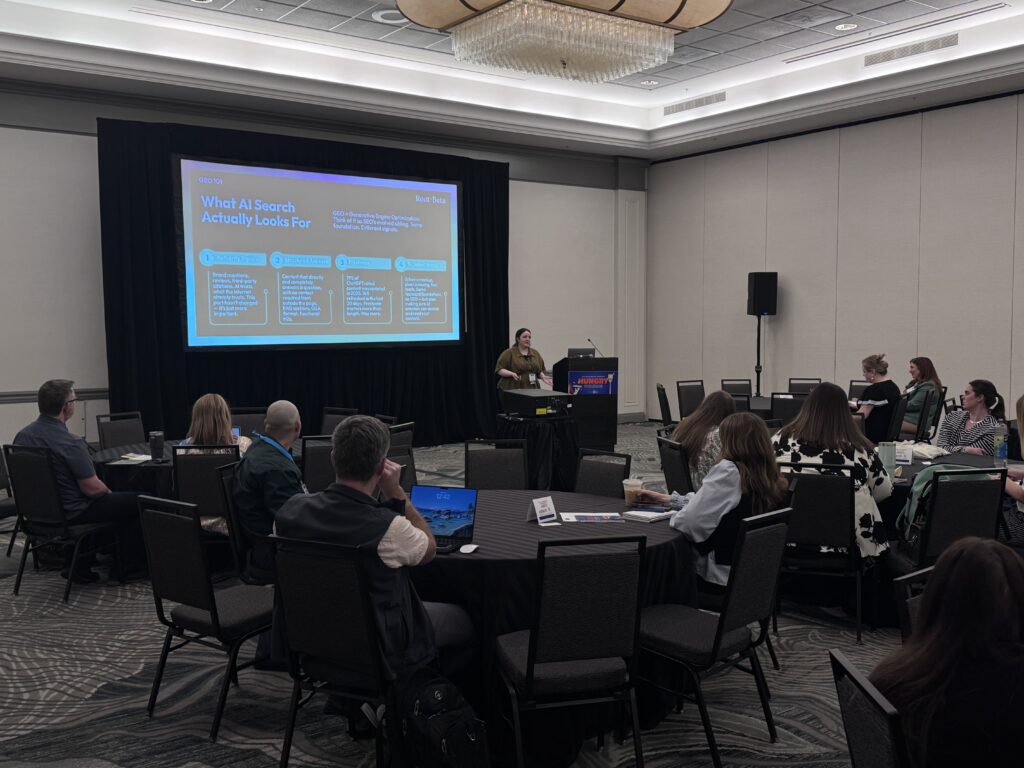
Alli Perkins, Director of Search and Organic Experience, delivers a presentation at NAMA.
What We’re Actually Listening For at Events
Walking a show floor or sitting in a session, we’re not collecting one company’s story. We’re listening for patterns across dozens of conversations:
What challenges keep coming up? What are multiple companies struggling with, not just one? What new technology is actually solving problems versus just creating buzz? What questions are clients and prospects asking? What are the companies pulling ahead doing differently?
A single anecdote is interesting, but a pattern across 20 conversations is a strategy that we can take back with us and apply to our work.
A Pattern That Changed Our Approach
One of the biggest shifts we picked up on over the past year: buyers are increasingly turning to AI-generated answers, Reddit threads, YouTube, and other nontraditional search experiences long before they ever land on a company website.
That single insight reinforced something we’d been circling: that traditional SEO alone isn’t enough anymore. It pushed us further into Answer Engine Optimization (AEO) and Generative Engine Optimization (GEO), stronger educational content, and broader search visibility for our clients. It’s a shift that is directly shaping how we’re building strategy right now.
To be fair, most conferences got the “AI matters” part right this year. Where a lot of the industry conversation fell short was focusing too much on AI as a content-production tool and not enough on how it’s changing buyer behavior. The bigger story isn’t that AI can write content; it’s that AI is fundamentally changing how people discover information in the first place. Search is becoming conversational. Buyers are researching differently. Brands need to earn visibility in places well beyond the traditional SEO rankings.
Turning A Big-Stage Idea Into Something Useful
Not every trend deserves a spot in a client’s strategy, and every one we hear gets filtered through the same question: does this help our clients reach the right audience more effectively, or achieve a business objective they actually have?
Sometimes the answer is yes, immediately. Sometimes it’s worth testing. And sometimes an idea is genuinely interesting but not practical for our clients today. Separating trends from real opportunities is the job, and it’s why we’d rather sit through 10 sessions and act on two good ideas than chase every shiny thing we hear on stage.
What Agribusiness Marketers Should Be Paying Attention To
If there’s one thing coming up in every room right now, it’s this: marketing is becoming more measurable and more accountable to business outcomes. Clients aren’t asking for more impressions or clicks anymore. They’re asking how marketing contributes to revenue, market share, customer acquisition, retention, and long-term growth. Every marketing dollar is being evaluated through a business lens, not a vanity-metric one.
If you could only walk away with three things from this year’s events, they’d be these:
- AI is changing how buyers research, long before they ever contact a salesperson. By the time a prospect reaches out, they’ve often already formed an opinion using tools that have nothing to do with your website.
- Educational, trustworthy content matters more as search evolves. As buyers rely less on traditional rankings, the brands that earn trust through genuinely useful content are the ones that stay visible.
- Integration across channels matters more than ever. The best-performing marketing strategies aren’t built around one platform. They’re built around the entire customer journey, start to finish.
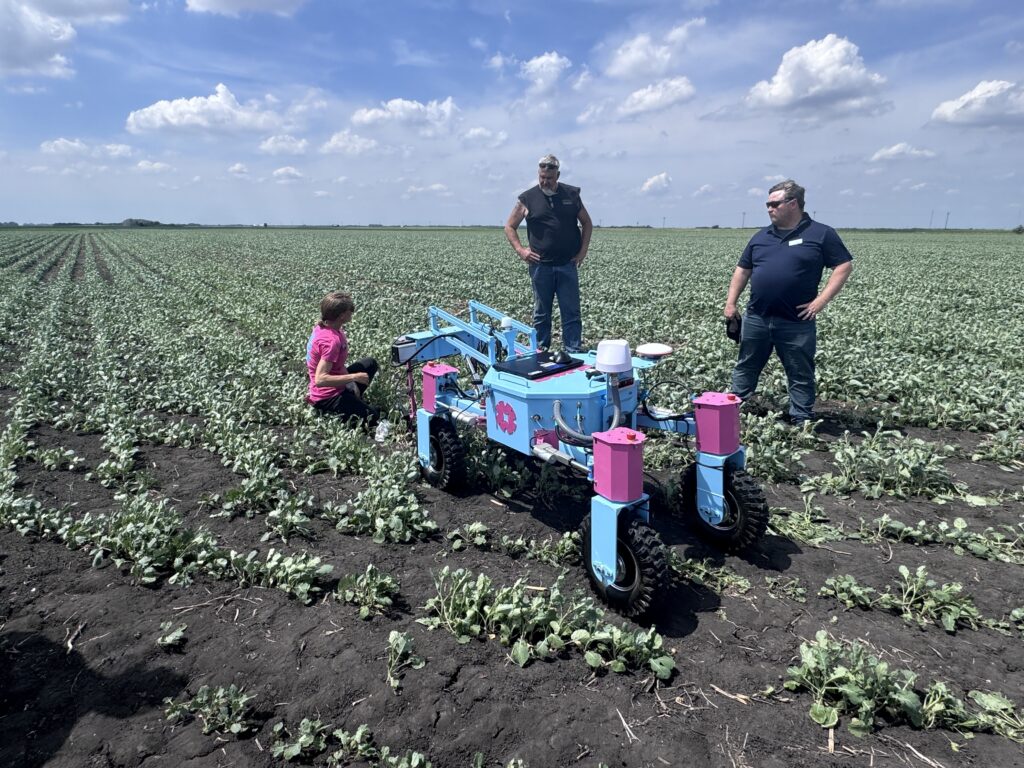
Attendees of Ag Tech Week observe new agriculture technology in the field.
What Would We Lose if We Stopped Showing Up?
Some of our strongest partnerships — with clients, future partners, and other marketers — started with a conversation at a conference, not a formal sales meeting. Those relationships get built through repeated, in-person interactions over time. You can’t shortcut that from behind a screen.
If we stopped showing up, we’d eventually fall behind. Marketing changes quickly. Agriculture changes quickly. We’d lose firsthand insight into what clients are actually experiencing, miss emerging trends before they became mainstream, and weaken the relationships that help us do better work. Our clients expect us to bring perspectives they don’t have time to gather themselves, and that’s a hard promise to keep from a laptop.
Where We’re Headed Next
Rather than asking where Root+Beta should show up next, we’d rather ask a different question: what conversations will our clients need us to understand three years from now? That’s where we should be. Whether it’s AI, changing search behavior, ag technology, measurement, or retail media, our job is to stay ahead of the curve so our clients don’t have to.
We DON’T need to attend every conference, but we DO need to be in the right ones and bring back what we learn.
Ready to see what we can do for you? Email us at howdy@rootandbeta.com, give us a call at (501) 291-1642, or schedule a meeting with us today.